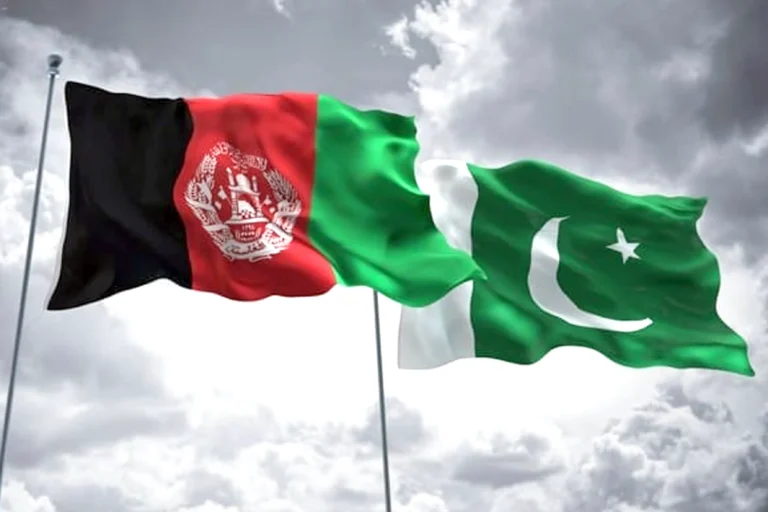
Controversy has arisen in Afghan political circles due to allegations of the use of Pakistani airspace against its territory,
which is one of the main factors behind the escalation of tension between the Taliban movement and the Pakistani government.
This is happening amid an indirect exchange of accusations between the two sides.
While some analyses suggest that Pakistani airspace may be used for military or intelligence operations,
authorities in Islamabad have categorically denied these claims.
Affirming its full commitment to the sovereignty of its airspace
and not allowing its use in a way that threatens the security of neighboring countries.
Counter-terrorism operations
These developments bring to mind the previous role of the United States in Pakistan.
Washington has previously used military bases in Balochistan province to carry out counter-terrorism operations.
Especially during the years of the war on al-Qaeda and other extremist movements in the region.
This date is of particular concern to the Taliban, who view any foreign air
or military activity in the vicinity of Afghanistan as a direct threat to their security.
In a related context, a wide debate arose regarding the identity
of the drone that was recently shot down, amid conflicting accounts.
The US-based Aviation Safety Network announced that the downed
drone was an MQ-9A Reaper, owned by the United States of America.
MQ-9A Reaper drone capabilities
The MQ-9A Reaper is one of the most advanced drones in the US military arsenal.
It can carry out reconnaissance missions or precision strikes, whether armed or unarmed.
This aircraft has a high capability to target stationary
and moving targets with great accuracy from long distances.
This makes it a key tool in military and intelligence operations.
Reaper drones typically operate at medium altitudes and are widely
used in conflict zones to monitor field movements and carry out targeted operations.
The confirmation that the aircraft was American-made raises concerns
about wider political and security repercussions that could further complicate the regional landscape.
Especially given the already strained relations between the Taliban and Islamabad,
and the sensitivity of any external interventions in the region.