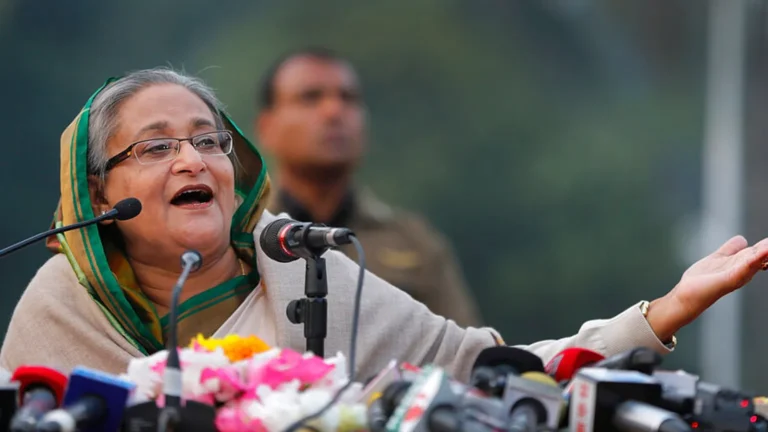
Bangladesh – The International Crimes Tribunal in Bangladesh today sentenced former Bangladeshi Prime Minister Sheikh Hasina to death in absentia. The sentence follows her conviction for crimes against humanity committed during the brutal crackdown on student protests in July and August 2014.
The court also sentenced former Interior Minister Asaduzzaman Khan Kamal to death. Former Inspector General of Police Chaudhry Abdullah Al-Mamun was sentenced to life imprisonment after cooperating as a prosecution witness.
Campaign of repression and political controversy
Investigations indicate that Hasina’s administration used lethal force against protesters. Security forces committed extrajudicial killings, torture, and enforced disappearances. They also obstructed medical assistance to the injured, drawing widespread condemnation from the international community and human rights organizations.
Islamic and political dimension
Despite recent criticism, some researchers, such as Arshad Alam, argue that Hasina’s past policies contributed to the rise of Islamist influence in the country. The government has been accused of leniency towards certain hardline groups, including the Hefazat-e-Islam movement in 2017. Furthermore, the recognition of degrees from independent religious seminaries allowed their graduates to apply for government jobs despite lacking the necessary professional qualifications.
Alam continued, “In its quest for absolute power, Sheikh Hasina’s government has eliminated the opposition. Opposition leaders have been imprisoned on trumped-up charges. Even civil society in Bangladesh is at risk of collapse. All of this has ensured that there is no rival to Hasina’s government in the foreseeable future. Now, the Islamists have filled this void in the opposition.”
“Because there is no other opposition, even non-Islamists have no choice but to support these Islamist parties. It would have been wise for Hasina’s government to take steps to preserve space for secular opposition. However, its pursuit of absolute power has decisively shifted the entire Bangladeshi political system to the right.”
This leniency has been considered by academic and journalistic analyses to be one of the factors that has strengthened the Islamists’ activities.
Transformations after the fall of Hasina
Following the ouster of Hasina’s government in August 2014, Jamaat-e-Islami Bangladesh gained increasing influence, significantly expanding its presence in state universities and key institutions. It also formed a new alliance with the National Citizens Party (NCP) to broaden its political reach. This included pressuring the interim government led by Mohammad Yunus to suspend the activities of Hasina’s Awami League party.
Summary
This conviction is a major blow to Sheikh Hasina’s political legacy and opens the door to a reshaping of the political and religious landscape in Bangladesh. It comes as Islamists gain influence following the fall of the previous government, amid fears of renewed social and political tensions in the country.