St. Petersburg, Russia – In a scene laden with political and cultural significance, Russian President Vladimir Putin received the King of Malaysia inside the renowned Hermitage Museum in St. Petersburg. This unconventional meeting conveyed messages that transcended standard political protocol.
The reception, held within one of the world’s most prestigious museums, was not merely a choice of venue. Rather, it appeared to be a carefully calculated Russian message employing history and culture as tools of soft power. This underscores Moscow’s desire to imbue its relations with rising Asian powers with a symbolic character.
According to diplomatic sources, the discussions focused on ways to enhance bilateral cooperation between Moscow and Kuala Lumpur, particularly in the areas of economy, energy, and defense. They also addressed regional and international issues of mutual interest, amidst the rapidly shifting landscape of global alliances.
The meeting comes at a sensitive time, as Russia seeks to expand its partnerships beyond the Western sphere. Furthermore, it aims to bolster its presence in Southeast Asia. Meanwhile, Malaysia pursues a balanced foreign policy based on diversifying its partnerships and avoiding dependence on any single axis. Observers saw the choice of the Hermitage Museum as the venue for the meeting as reflecting the Kremlin’s desire to send a message that Russia is not merely negotiating, but also showcasing its history and cultural influence. This comes at a time when Moscow is redefining its diplomatic tools.
Thus, the meeting was not simply a photo opportunity between a president and a monarch, but a carefully orchestrated diplomatic spectacle… where politics and art intertwine, and interests are negotiated within the walls of history.
Palace and museum diplomacy: Putin receives the King of Malaysia at the Hermitage in the heart of St. Petersburg
Russia welcomes the King of Malaysia to the Hermitage Museum
Medhat Elsheikh
Medhat El-Sheikh, editor-in-chief of the Voice of Emirates News Agency office in Cairo, is a seasoned Egyptian journalist with extensive experience both within Egypt and abroad....



Samsung begins mass production of HBM4 memory and supplies it to Nvidia for AI processors
Samsung's global competitiveness is reflected

Slot lashes out at refereeing: Salah denied a clear goal against Manchester City
London, England - Liverpool manager Arne Sloat has objected to the refereeing…

Trump warns of the risk of election fraud and calls on Republicans to reform the electoral system
Amid widespread political controversy within the United States
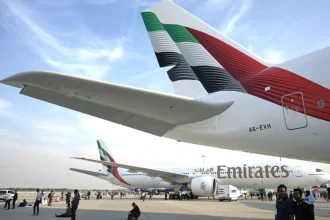
Civil Aviation: UAE-Algeria flights to continue during transition period despite Algerian notification
It aims to maintain the continuity of air traffic