
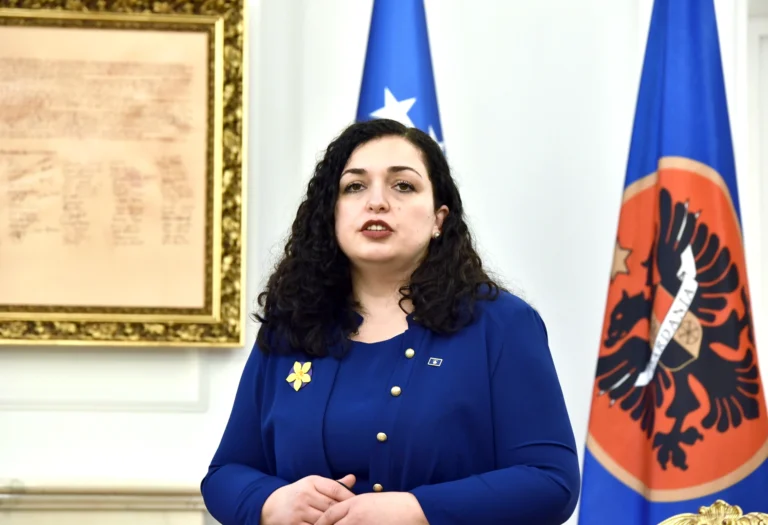
Pristina, Kosovo – In a striking political development, Kosovo President Vjosa Osmani emerged as the only woman among the leaders who signed the Peace Council Charter.
Observers considered this a powerful message about women’s presence in international decision-making centers, amidst a global landscape dominated by men.
Osmani’s signing was not merely a formality; it carried profound political significance, especially given the escalating international tensions
and the growing need for new mechanisms for dialogue and peacebuilding.
According to informed sources, the Kosovo president’s participation came after extensive consultations,
underscoring her country’s commitment to supporting diplomatic efforts and prioritizing understanding over conflict.
Analysts believe that Fjosa Osmani’s presence as the sole female signatory to the charter reflects
a gradual—albeit slow—shift in the perception of women’s role in major issues, particularly security and peace,
which for decades were the exclusive domain of male leaders.
The Peace Council aims to enhance coordination among signatory states and establish permanent
channels of communication to address international crises and prevent the outbreak of conflicts,
at a time when the world is experiencing one of its most turbulent periods since the end of the Cold War.
Osmani’s signature, in this sense, was not a mere exception, but rather a dual political message:
firstly, it affirms Kosovo’s position on the international peace map,
and secondly, it underscores women’s ability to be present and influential in the most critical and complex global issues.