Damascus, Syria – All eyes are on the city of Qamishli (Qamishlo) today, Tuesday, where a meeting described as “crucial” is being held at noon. The meeting was called by the leadership of the Kurdish Progressive Democratic Party in Syria, represented by its Secretary, Dr. Salah Darwish. This invitation comes as an “urgent appeal” to all Kurdish political forces and parties without exception, in an attempt to unify ranks amidst the rapidly evolving and dramatic shifts in the map of control and influence in Syria.
A race against time after the “merger agreement”
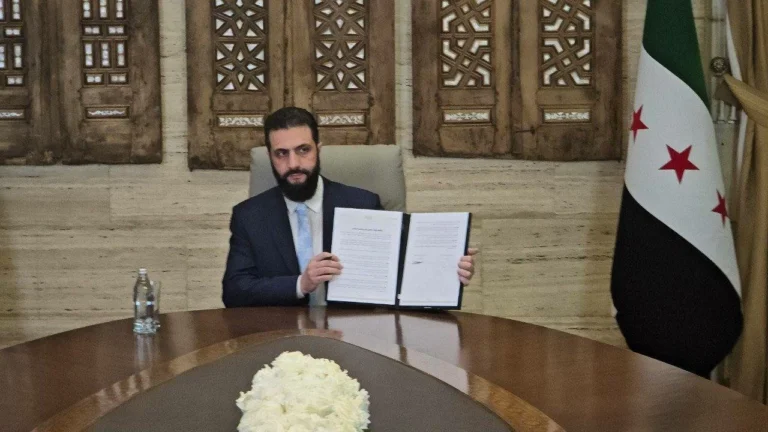
This political move comes just two days after the signing of the historic agreement between President Ahmed al-Sharaa and the leadership of the Syrian Democratic Forces (SDF) on January 18. The agreement laid the foundations for a new phase in the country. Key provisions included: military and security integration; the complete integration of the SDF into the Syrian army and security forces; the extension of administrative sovereignty, with the full handover of the administration of Raqqa, Deir ez-Zor, and Hasakah governorates to the central government in Damascus; and international backing, with the establishment of broad security arrangements under international auspices. A clear American role was prominent in these arrangements, aimed at ensuring a halt to military escalation and facilitating the transition process.
Abdul Basit Sida’s vision: “The unified committee is the solution.”
In light of these developments, Syrian writer and politician Abdulbaset Sida shared a vision this morning via the “X” platform, reflecting the aspirations of a broad segment of the Kurdish political elite. Sida called for the Qamishli meeting to produce tangible results that would avert catastrophic scenarios in the region. He also proposed a roadmap that includes the formation of a unified Kurdish committee to immediately travel to Damascus to negotiate a comprehensive political agreement building upon past achievements. He urged building upon the recent talks in Erbil between SDF commander Mazloum Abdi, Masoud Barzani, and the US envoy to reach compromises acceptable to all parties. He further warned that any internal armed confrontation at this sensitive time would have dire consequences for the social fabric of Syria in all its diversity.
Negotiation instead of confrontation
The voices calling for this meeting emphasize that the new Syrian reality necessitates moving beyond “emotional measures,” whether nationalist or religious in nature. They stress that negotiation with the central government—despite its complexities—remains the only rational option for safeguarding security and stability. It also ensures that the new Syria becomes a homeland that embraces all its citizens and respects their distinct identities under the umbrella of a unified state. Anticipation is high among the public in northeastern Syria as they await the meeting’s final statement. Fundamental questions revolve around the extent to which the Kurdish parties will respond to this call and their ability to formulate a unified political stance to address Damascus at this pivotal moment in the country’s history.