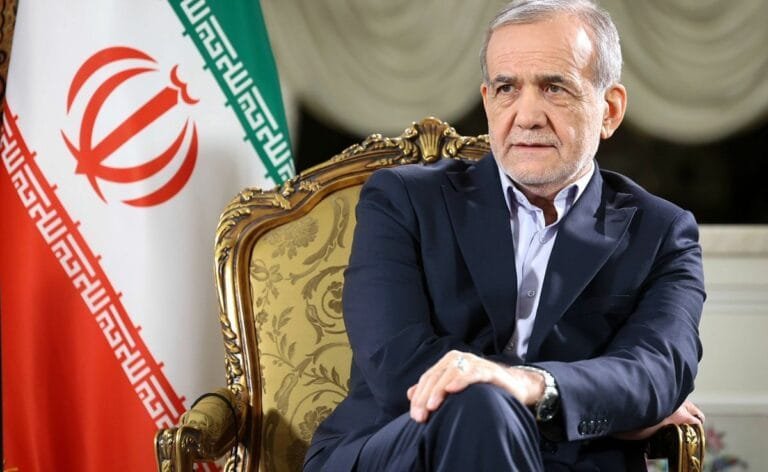
Tehran, Iran – Iranian President Masoud Pezeshkian warned that his country would respond “harshly and regrettably” to any US attack. As the Iranian judiciary hinted at the possibility of executing some of those arrested in connection with the widespread protests that swept the country in recent weeks, international pressure on Tehran intensified.
Reuters quoted an Iranian official as saying that the protests, which erupted late last month due to deteriorating economic conditions and broad political demands, have left at least 5,000 people dead. Among the dead are approximately 500 members of the security forces. These disturbances are considered among the most violent and bloody since the 1979 Islamic Revolution.
In a post on the X platform, Pezeshkian asserted that any attack targeting Iran or its supreme leadership would be considered “an all-out war against the Iranian nation.” He also emphasized that his country would not compromise in defending its sovereignty. His remarks came amidst repeated threats from US President Donald Trump, who vowed to take “very strong action” if Tehran proceeded with the executions of protesters. In a media interview, Trump stated that “the time has come to look for new leadership in Iran.”
In the same vein, the spokesperson for the Iranian judiciary indicated that some cases related to the protests have been classified as “enmity against God,” one of the most serious crimes under Iranian law. This opens the door to issuing and carrying out death sentences, a move that has raised widespread concerns among human rights organizations.
Human rights organizations confirmed that the authorities’ crackdown led to the arrest of more than 24,000 people, while documenting the deaths of thousands of protesters, with other figures still being verified. Despite the authorities’ claims of a decline in the intensity of the protests over the past week, eyewitnesses reported the use of excessive force against protesters in several cities, particularly in the Kurdish regions of the northwest, which witnessed the fiercest clashes.
Tehran accuses external parties, including the United States and Israel, of fueling the unrest. It also asserted that any foreign interference would be met with a decisive response, while the Iranian landscape remains open to further escalation both domestically and internationally.