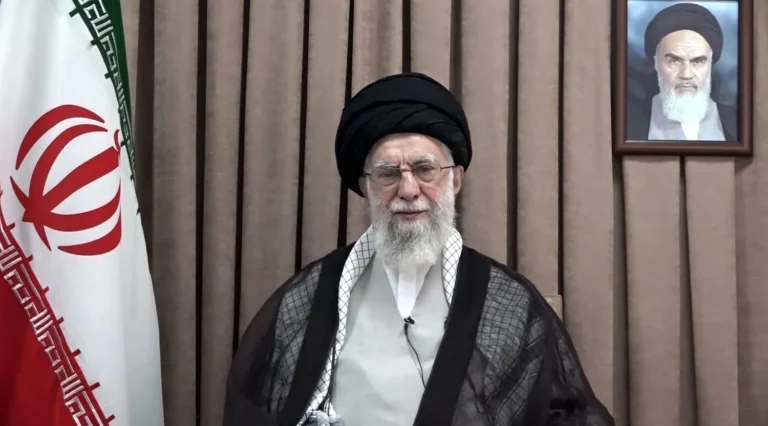
Tehran, Iran – In a move reflecting heightened security measures, Iranian Supreme Leader Ali Khamenei directly appointed General Ahmad Vahidi as deputy commander-in-chief of the Islamic Revolutionary Guard Corps (IRGC). Vahidi is on Interpol’s wanted list and subject to US and European sanctions.
This appointment coincides with a new wave of widespread popular protests sweeping Iranian cities, denouncing the currency collapse and soaring prices. This suggests that the regime has decided to resort to a more decisive “strategic approach” to manage the crisis.
Calling on “The Man of Difficult Tasks”
The appointment of Vahidi is not seen as a routine administrative procedure. Rather, it is a summoning of the “black box” of Iran’s security files spanning 40 years.
Vahidi, who was the first commander of the Quds Force and served as both Minister of Defense and Minister of the Interior, is considered the most knowledgeable leader in how to link suppressing internal unrest with managing external threats.
Vahidi is on Interpol’s wanted list (at the request of Argentina) on suspicion of involvement in the 1994 bombing of the AMIA Jewish center in Buenos Aires. Tehran categorically denies this accusation.
He is also on US and European sanctions lists because of his role in developing military programs and regional interventions.
The mission: “Swift resolution” and revolutionary readiness
Khamenei assigned General Vahidi a specific mission: to play a “jihadist and revolutionary role” to advance the tasks of the Revolutionary Guard in a “decisive and rapid” manner.
Observers believe that the use of “decisive” language in the appointment decree is a green light for the use of excessive force, aimed at ending the protests that have begun to paralyze major markets in Tehran, Isfahan, and Shiraz.
The timing of the appointment, on the last day of 2025, reflects a desire to strengthen the home front. It demonstrates the leadership’s wish to prevent any defections or weakening of the Revolutionary Guard’s ranks in the face of public pressure.
The strategy also involves utilizing Vahidi’s experience as a former interior minister to streamline coordination between the police, the Revolutionary Guard, and the Basij militia. This underscores that Iran is governed with an “iron fist” at a time of escalating military threats from the United States and Israel.