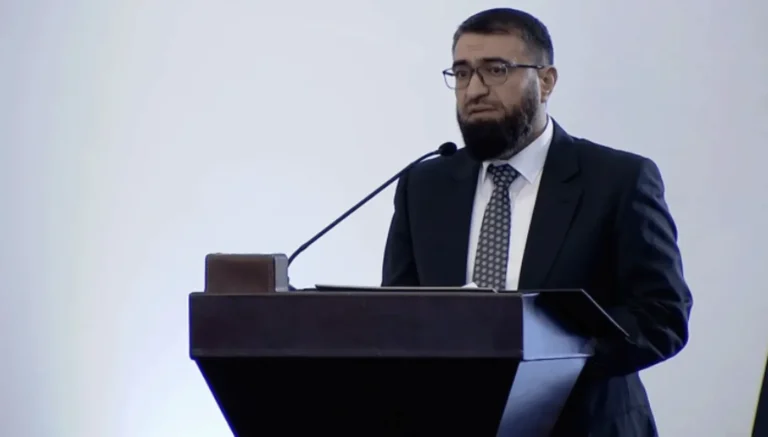
Damascus, Syria – Syrian Justice Minister Mazhar al-Wais categorically denied that a death sentence had been issued against former Grand Mufti Ahmad Badr al-Din Hassoun. He confirmed that the case is still under judicial review and has not yet reached the stage of issuing any verdict, whether of conviction or acquittal. Al-Wais told Al-Arabiya that the case was transferred from the Ministry of Justice to the investigating judge at the Ministry of the Interior, and that the legal proceedings are continuing.
The minister’s remarks come after widespread, unconfirmed reports that Hassoun had been sentenced to death. He faces formal and documented charges as part of extensive investigations into prominent security and political figures from the former regime.
Last August, the Syrian Ministry of Justice released video footage of interrogation sessions with several former officials, including Hassoun, Brigadier General Atef Najib (former head of the Political Security branch), former Interior Minister Mohammed al-Shaar, and Major General Ibrahim Hawija (former head of the Air Force Intelligence Directorate). The recordings showed that the investigating judge charged Hassoun with “incitement, complicity, and involvement in murder.” This marked the first public step in the declared transitional justice process in the country. The minister’s statements came in response to Abdul Rahman Hassoun, the son of the former Grand Mufti, who asserted that his father had issued a fatwa.
He was “clear in his prohibition of harming the protesters.” He said he addressed Bashar al-Assad directly at the height of the protests, saying, “May every right hand that reaches out against the people be paralyzed.” He emphasized that the issue at that time “was not about bread, but about dignity.”
The legal cases of former officials constitute one of the most sensitive issues in Syria, especially given the increasing official discourse surrounding a transitional justice process. This process aims to review past violations, determine accountability, and open a new political chapter. All of this is taking place under close international and regional scrutiny.