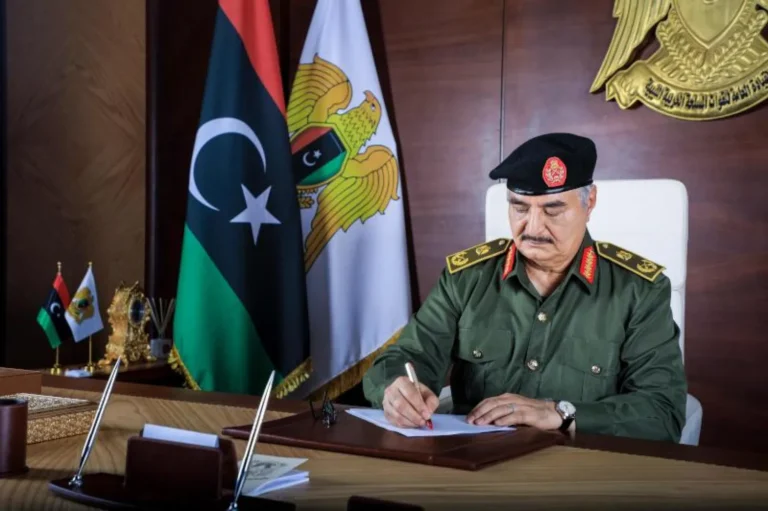
Benghazi, Libya – The Commander-in-Chief of the Libyan National Army, Field Marshal Khalifa Haftar, warned that the continuation of the political crisis in the country is threatening Libya’s unity and future, stressing that the real way out lies in enabling the Libyan people to determine their own destiny.
Haftar’s remarks came during his meeting in Benghazi with tribal leaders, elders, and wise men from the city of Gharyan, according to a statement issued by the media office of the General Command of the Libyan National Army.
The solution lies in the hands of the people and preserving unity.
Haftar stressed that “the repercussions of the political crisis in Libya threaten the country’s unity and future.” He affirmed that “genuine solutions can only come from the will of the Libyan people, enabling them to claim their right to self-determination. In doing so, they will chart a course that addresses the crisis and builds the state they aspire to, while preserving national unity and guaranteeing their right to a dignified life.”
Neglect and deterioration in western regions
Haftar pointed to “the achievements and gains made in the east, center, and south of the country.” He cited “the defeat of terrorism and the building of the national army,” and the resulting security and stability. He also added that “the renaissance in the areas of construction and development and the consolidation of the state’s authority were among the results.”
In contrast, the Commander-in-Chief of the Libyan National Army pointed out that: “Some cities and villages in the rest of the country are still suffering from neglect.”
He added, “Its people live in turbulent security conditions, and it lacks development projects and infrastructure. Services are also scarce, with no clear signs of being addressed by the competent authorities.”
Haftar’s statements come amid the ongoing political stalemate in Libya, and regional and international attempts to push Libyan parties towards an electoral path that leads to ending the state of division.
Libya remains divided between two rival governments, one in the west (the Government of National Accord headed by Abdul Hamid Dbeibah) and the other, backed by Haftar and the parliament, in the east (the government appointed by the parliament). This deepens the uncertainty.