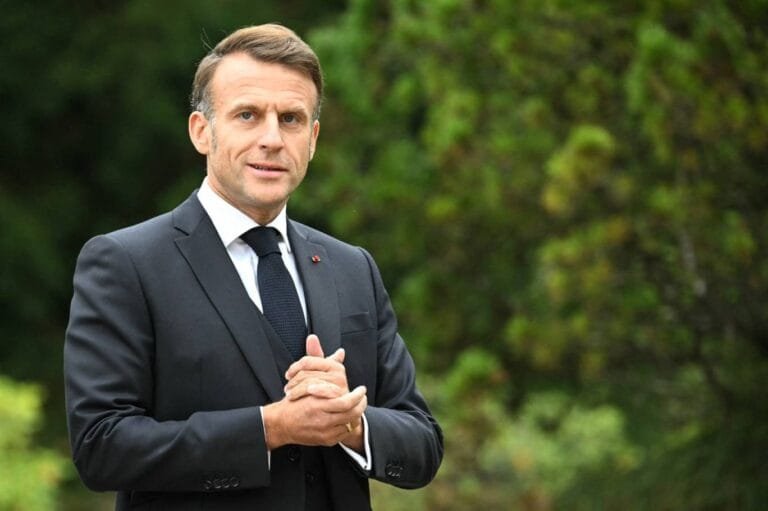
Paris, France – French President Emmanuel Macron expressed his readiness for a “serious and calm dialogue” with his Algerian counterpart, Abdelmadjid Tebboune. This came in remarks he made ahead of the G20 summit in South Africa.
Macron expresses his readiness for a serious and calm dialogue with Tebboune
Macron also indicated his readiness to meet with Tebboune on the sidelines of the summit, provided that the appropriate conditions are in place to achieve tangible results.
Macron said, “I am naturally open to any serious and calm dialogue with the Algerian president… I want France to be respected. If the conditions are right and we can achieve results, I am fully prepared for any discussion at both the political and diplomatic levels.” He added that “diplomatic teams are currently working on this issue,” indicating ongoing efforts to reactivate channels between the two countries.
French press reports have indicated signs of a thaw in strained relations, noting an increase in diplomatic contacts between the two sides and suggesting that practical steps may soon be taken to pave the way for a more stable new chapter.
The French newspaper Le Figaro reported that Macron’s remarks came after he received the French-Algerian writer Boualem Sansal at the Élysée Palace. The paper also noted other positive signs, including the message Macron sent to Tebboune on the 63rd anniversary of the outbreak of the Algerian Revolution (November 1st).
BFMTV and 20 Minutes also reported a marked improvement in relations between Paris and Algiers following President Tebboune’s decision a few days ago to release Sansal, who had been detained in Algeria last summer. They noted that Macron is seeking to address bilateral disagreements, particularly on sensitive issues such as immigration, security, and judicial cooperation.
However, the Algerian side denied any connection between the diplomatic rapprochement and the pardon. Foreign Minister Ahmed Attaf, Minister of the National Community Abroad and African Affairs, affirmed that the resumption of contacts between the two countries “preceded the pardon decision.” He clarified that Sansal’s release “did not affect the course of bilateral relations,” and urged against “exaggerating its significance.”
In the same vein, several French officials called for dialogue instead of confrontation. Interior Minister Laurent Nuñez stated that “arm-twisting” and pressure tactics were “futile.” Foreign Minister Jean-Noël Barrot emphasized the need to respect Algerian sovereignty as a prerequisite for restoring trust, considering Sansal’s release a “strong blow” to those advocating escalation and hardline policies toward Algeria.