
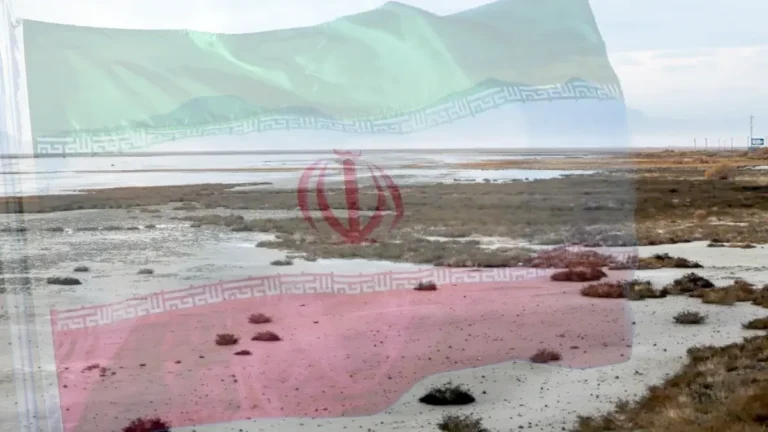
Tehran, Iran – Iranian authorities have begun cloud seeding operations amid a drought that is among the worst the country has seen in decades, state media reported.
The IRNA news agency reported, “A cloud seeding operation was carried out
in the Lake Urmia basin for the first time in the hydrological year,” which begins in September.
The water level of Lake Urmia, the largest lake in Iran and located
in the mountainous regions of the northwest of the Islamic Republic, began to rise.
It has been declining since 1995 due to drought.
Iran is suffering from drought
IRNA reported that further operations would take place later in the provinces of East and West Azerbaijan.
This technique is based on cloud seeding through chemical substances such as silver iodide.
Tehran announced last year that it had developed its own technology in this field.
Iran has been suffering for years from drought and successive heat waves,
which are expected to worsen under the impact of climate change.
driest autumn
IRNA reported that the country is currently experiencing “the driest autumn in fifty years”.
The National Weather Service reported that rainfall this year is 89% below the long-term average.
However, the agency noted rainfall in several areas in the west and northwest of the country.
Iranian media outlets broadcast footage of snowfall for the first time
this season in Alborz province and the Tochal ski resort north of Tehran.
The governorates did not witness a single drop of rain.
According to local authorities, rainfall in the Iranian capital is at its lowest level in a century.
Half of the governorates have not seen a drop of rain for months.
Water levels in the dams that supply many provinces have dropped to their lowest historical levels.
In early November, President Masoud Pezeshkian warned
that Tehran residents might have to be evacuated.
In early November, President Masoud Pezeshkian warned
that Tehran residents might have to be evacuated.
The government later clarified that this statement was intended
to warn residents about the seriousness of the situation.
Not announcing an actual operational plan.