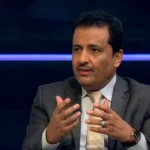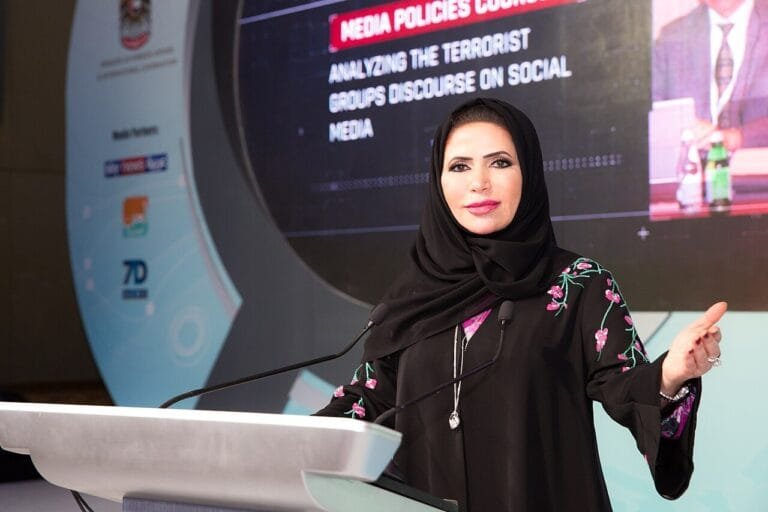
Abu Dhabi, UAE – Ebtisam Al-Ketbi, President of the Emirates Policy Research Center, affirmed that the United Arab Emirates was established as a voluntary union of its constituent parts, built on shared will, not force or coercion. She pointed out that this voluntary unity provided the union with a solid foundation, establishing a stable and secure state in a regional environment where states were founded on the logic of power and conflict.
Unity is a voluntary choice, not the result of conflict.
Al-Ketbi stated on the “X” platform that the UAE was not formed through the annexation of territories or the forceful consolidation of regions. Rather, the union arose from a consensus among its constituent parts on the path to stability, development, and the preservation of national identity. She explained that this prior choice of partnership and consensus distinguishes the Emirati experience from other experiences in the region, which have often been associated with conflict and competition for power.
Cultural and social homogeneity is the foundation of strength
She pointed out that the union was not merely a fleeting administrative agreement, but rather a deeply rooted cultural, social, and political unity. She further noted that Emirati society was shaped by tribal and economic ties, shared lifestyles, and values of solidarity and mutual support. Consequently, this made the federal state a unifying framework that embraces diversity without erasing local identities.
Sheikh Zayed’s role in building the Union
Al-Ketbi highlighted the pivotal role of the late Sheikh Zayed bin Sultan Al Nahyan, whom she described as the architect of the Union and its moral and political leader. She emphasized that his vision was based on the principle that unity was a pact of trust between its constituent parts, not a top-down decision. He also worked to establish the principle that the Union is a source of strength for all, not a privilege for one party at the expense of another.
Balanced development to ensure the sustainability of the union
She pointed out that Abu Dhabi, despite possessing the largest share of oil wealth, did not monopolize the resources. Rather, it invested them in development and infrastructure projects that encompassed all the emirates, including roads, schools, hospitals, and housing. This embodied the idea that shared wealth and balanced development are the foundations for the sustainability of unity.
Unity is a strength built on satisfaction and trust.
Al-Ketbi concluded by saying that the UAE experience proves that a union built on will and the equitable distribution of opportunities and wealth is stronger than any form of unity imposed by force. She emphasized that the unity of the UAE is not merely a rhetorical slogan, but a continuous political, economic, and ethical practice that has solidified the strong state we see today.