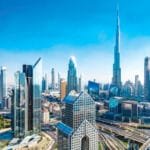
Dubai, UAE – The UAE is steadily consolidating its position as one of the world’s leading models for adopting sustainability.
To be a major economic driver that contributes to creating new investment opportunities and enhancing the efficiency of resource use.
In addition to raising the competitiveness of the national economy regionally and globally.
Sustainability projects in the UAE constitute a fundamental axis in the economic transformation process, and a model that reflects the comprehensiveness of the vision in light of its expansion in launching and implementing qualitative projects in clean energy.
In addition to green infrastructure, sustainable urban planning, low-emission transportation, and recycling.
Sustainable finance is at the heart of this transformation as it translates environmental plans and goals into actionable and growthable projects.
The UAE has succeeded in building an advanced system of sustainable financing, including green bonds and sukuk, blue bonds, and sustainability-related loans.
These tools have contributed to mobilizing capital to finance sustainable projects in various sectors.
Bashar Al Natour, Executive Director and Global Head of Islamic Finance at Fitch, said: The ESG debt instruments market, which is linked to the environment, governance and society in the UAE, is expected to continue its growth.
increasing demand
Javier Cavada, President and CEO of Mitsubishi Power Europe, Middle East and North Africa, emphasized the growing demand for clean and advanced energy in the UAE and the Middle East.
He explained that the current market is characterized by unprecedented demand for energy.
Especially in the clean energy sector, through solar and wind energy projects.
For his part, Dr. Mustafa Ahmed, Technical Director of the International Solid Waste Management Corporation, stressed that regulations and legislation can constitute a basic motivation for companies to implement sustainable management practices and recycling processes.