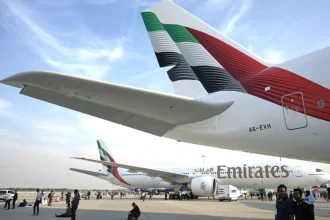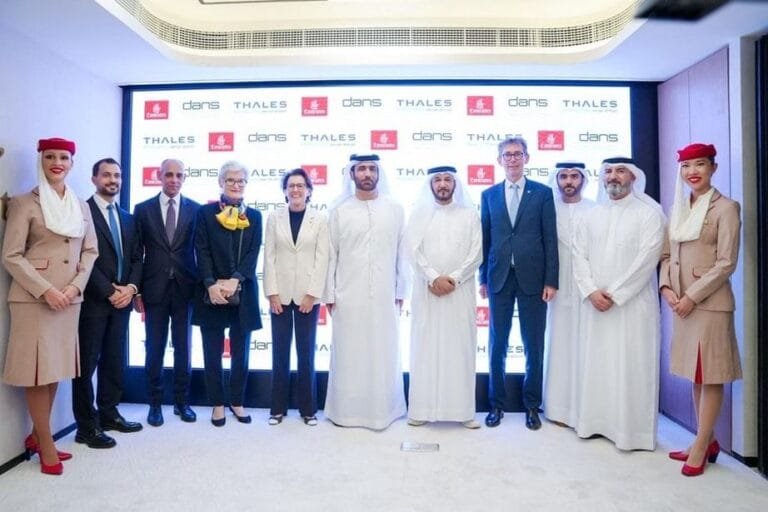
According to a press release, this cooperation, in order to more safely and efficiently manage the country’s airspace, enhances the UAE’s goal of achieving net zero emissions by 2050.
Waiting area patterns provide a safe and organized system for the sequence of aircraft arriving during peak traffic and runway congestion, flying on carefully designed tracks in the form of a race track at specific altitudes to ensure smooth access.
While waiting patterns are essential for safety and process flow, reducing their occurrence reduces fuel consumption and associated carbon emissions.
Under this agreement, the three partners will work together to find innovative ways to improve air traffic management.
The core of their efforts is to integrate advanced artificial intelligence technologies, which will play a pivotal role in identifying potential congestion areas and providing recommendations to stakeholders.
By leveraging these AI-based insights, the collaboration aims to help air traffic controllers and airlines reduce delays, enhance predictability, and increase operational efficiency across the airspace network.